The heat wave in Europe will trap atmospheric pollutants, causing the air quality to degrade, especially in towns and cities, an official from the World Meteorological Organization said on Friday.
“The stable and stagnant atmosphere acts as a lid to trap atmospheric pollutants, including particulate matter,” Lorenzo Labrador, WMO scientific officer, told a Geneva press briefing.
“These result in a degradation of air quality and adverse health effects, particularly for vulnerable people.”


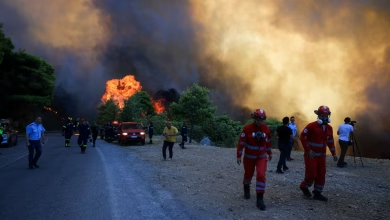
More than 400 people were evacuated from the hills of Mijas, a town popular with northern European tourists in the province of Malaga. Beachgoers in Torremolinos, some 20 km away, could see plumes of smoke rising above the hotels lining the coast.

Meanwhile, the worst drought in over 70 years reduced Italy’s longest river, the Po, to little more than a trickle in places, with temperatures expected to rise next week.

Officials are worried about the effects on people’s health and on healthcare systems already challenged by the COVID-19 pandemic as the searing heat sweeps the continent, with warnings issued for worse to come in Britain in particular.

Portuguese Health Minister Marta Temido said on Thursday the health system faced a “particularly worrying” week due to the heatwave and said some hospitals were overwhelmed.
From July 7 to July 13, Portugal registered 238 excess deaths due to the heatwave, the country’s DGS health authority said. Spain registered 84 excess deaths attributable to extreme temperatures in the first three days of the heatwave, according to the National Epidemiology Centre’s database.