
Prepared by: Masume Eshtiaghi
Have you ever been to a wetland? I guarantee you that you either visited one, or lived in one, without realizing it holds that name.
The same happened with the ‘Hur al-Azim wetland’ community. When I visited them, I found that although they may not call their home a “wetland”, they understand its value more deeply than anyone else.
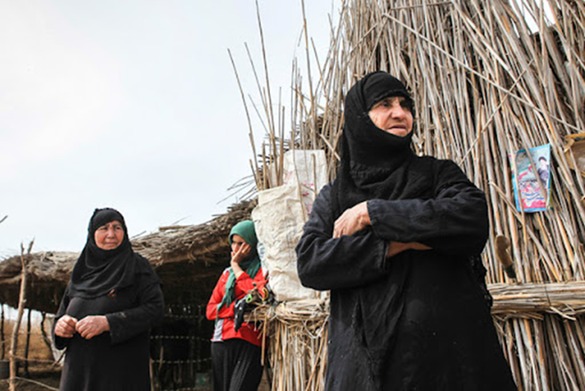
Their lives are woven around this landscape, and they know instinctively how to use it wisely and preserve it, especially women, whose knowledge and practices keep its balance alive.
Wetlands include marshes, swamps, bogs, mangroves, mudflats, floodplains, and certain types of rivers, ponds, lakes, lagoons, and billabongs. They provide numerous beneficial services that qualify them to be named “biological supermarkets”.
Some of these services include protecting and improving water quality, providing fish and wildlife habitats, storing floodwaters, and maintaining surface water flow during dry periods.
The Hur al-Azim wetland (Hwaizeh Marshes), shared between Iran and Iraq, has long been a lifeline for local communities, biodiversity, and cultural heritage.
In recent decades, unsustainable water management, oil exploration, the impacts of war, and climate change have caused its severe degradation.
Women globally are at the heart of the protection of wetlands, and to acknowledge their valuable role, in 2024, the International Women’s Day themed “Invest in Women:


Accelerate Progress”, the Secretariat of the Convention on Wetlands proudly presents the inaugural cohort of twelve “Women Changemakers in the World of Wetlands.”
Their achievements underscore the pivotal roles that women worldwide play in preserving, managing, and safeguarding wetlands.
Adhaar Ali Karim, who is a resident of Al-Sanaf Marsh, which is located on the Iraqi side of the wetland and is part of the larger Hur al-Azim wetland (Hwaizeh Marshes), finds that her work as a farmer and social activist qualifies her to see and talk about things that only insiders know.
She expressed with sorrow the deterioration she witnessed in the wetland, and said that the “lack of rainwater, and rising temperatures have led to reduced water availability.”
“We farmers have faced major problems due to water scarcity. Water consumption must be rationalized, and improved initiatives can play a big role”, said Adhaar. She talked with pain and felt helpless while saying, “the drought has caused huge suffering, especially for families with low incomes.”
On the Iranian side of the Hur al-Azim wetland, the family of Mina Ahwazi is living in Khuzestan. The borders divided the two communities, but challenges unified their needs.
Ahwazi complained about water shortages and the drying up of Hur al-Azim Wetland in their daily lives. She said, “We almost have no life in the summers because of the lack of water and the dust that has destroyed all our lives. The drying up of the Hur al-Azim Wetland destroyed the prosperity and vitality of the region.”


The role of women in protecting and restoring Hur al-Azim wetland (Hwaizeh Marshes) is to endure the drought, and to try to be more flexible and come up with better solutions, as described by Sahiya Abid Abdullah, a married woman who lives in Hur al-Azim (Hwaizeh), Iraq and raises buffalos and livestock.
Sahiya is also trying to have a role in the restoration of the marshes by urging men and sons in rural areas to demand solutions from the government for these difficult conditions, the most important of which is delivering water to the marshes so that we can sustain life here in the marsh and rural areas.
Not far from where Sahiya lives, we met Sumaya Rahim Al-Saadi, who lives in Maysan, Al-Mashra, Iraq. As an environmental and community activist, she believes that women can participate in activities such as planting agricultural crops that use modern methods to reduce water consumption, protecting wildlife, and cleaning wetlands.
Sumaya holds a bachelor’s degree, and her education gave her some privileges that she wishes other girls in her community would equally gain.
“Women can play a role in educating children and the local community about the importance of preserving wetlands and the environment. They also have a role in decision-making; women can participate in decisions related to wetland management and the use of natural resources in accordance with rural environmental conditions.”
She witnessed how women’s contributions, including providing local knowledge and expertise, participating in field activities to protect wetlands, helped develop environmental education and awareness programs, and how they participated in discussions and decisions about wetland management.
Her words opened my eyes as a researcher to the importance of planning campaigns that seek to mobilize women’s leadership and solidarity across borders to support the restoration and sustainable management of the Hur al-Azim wetland (Hwaizeh Marshes), ensuring it once again becomes a source of life, peace, and prosperity for both nations.
The Hur al-Azim wetland (Hwaizeh Marshes) can be revived only through unity and action across borders. Women, as guardians of life and resilience, must be at the center of this effort.
By empowering women, mobilizing communities, and pressing for policy change, our efforts aim to restore the wetland’s ecological health and safeguard a shared future of sustainability for Iran and Iraq.


