Dr.sally fouda:”Biochar at the Heart of the Green Nuclear Revolution: A Carbon Shield for a Sustainable Future”
Researcher in agricultural engineering institute in agricultural research centre

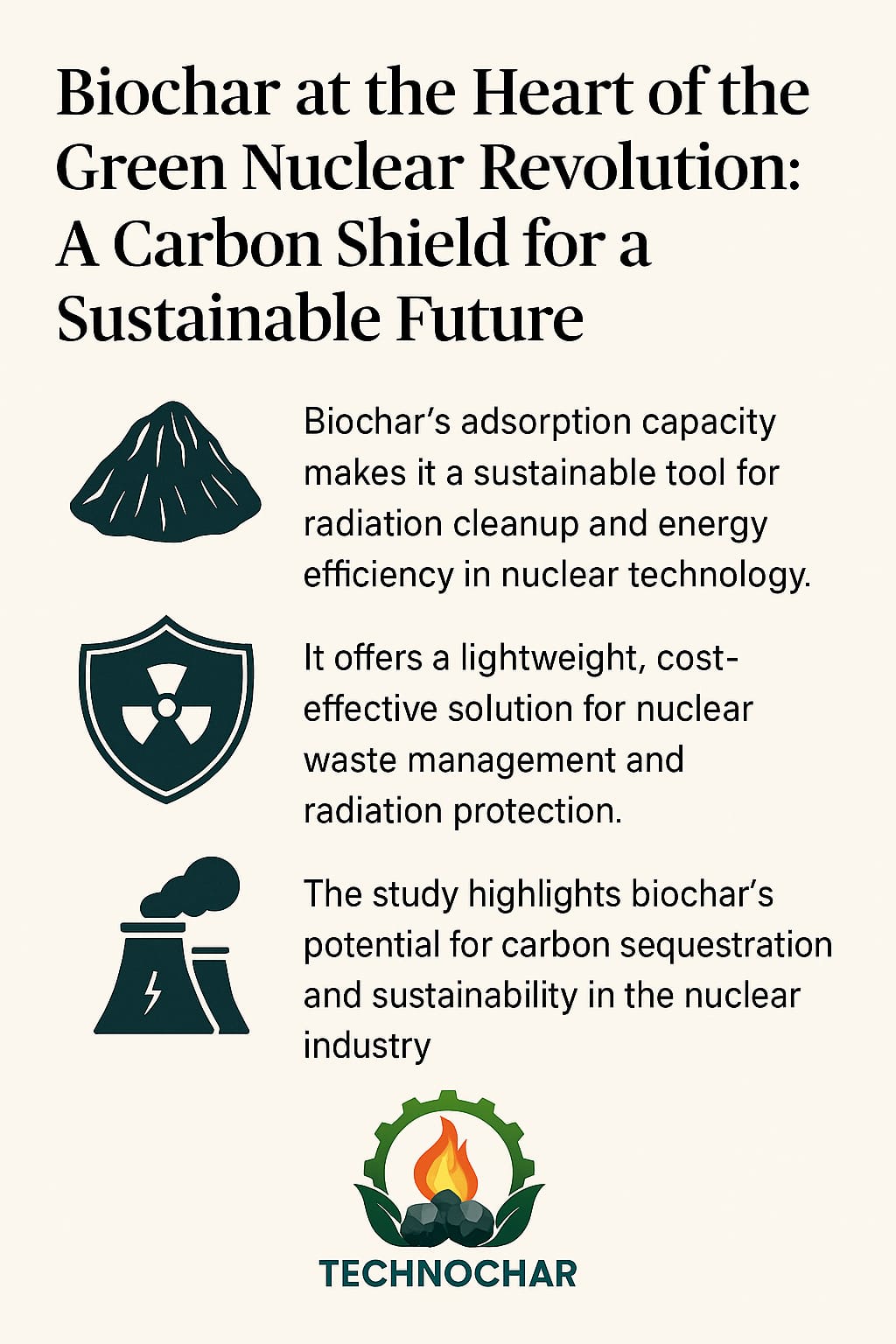
At the fascinating intersection of environmental science and nuclear technology, biochar — produced through the pyrolysis of biomass — reveals unprecedented potential in enhancing sustainability within one of the most complex and sensitive industries: the nuclear sector.
Thanks to its high porosity and unique adsorption properties, biochar stands out as an effective and safe tool for radiation decontamination and radionuclide immobilization. It plays a pioneering role in nuclear waste management.
Whether dealing with low-level liquid waste or high-level radioactive materials, biochar provides innovative, lightweight alternatives for radiation shielding.
Its role does not stop there. Controlled pyrolysis processes also allow for the production of protective barriers tailored with specific physical and chemical properties to meet nuclear requirements.

From the perspective of the circular economy, studies demonstrate biochar’s economic viability and market potential as an eco-friendly and low-cost material.
While contributing to carbon footprint reduction through efficient carbon sequestration, biochar’s integration with artificial intelligence helps optimize its performance and develop innovative applications.
Case studies provide real-world evidence of its success in nuclear environments.
The study concludes that integrating biochar into nuclear applications is not only an environmentally intelligent step, but also the beginning of a new era in green nuclear technology.
🔬 Recent Studies on Biochar in Nuclear Applications
1. Nuclear Waste Management
Uranium Removal from Contaminated Soil: A recent study demonstrated the effectiveness of biochar in reducing uranium mobility in soil, limiting its toxicity to plants and its transfer within the food chain.
Cesium and Strontium Removal from Water: Engineered biochar has been developed to remove radioactive isotopes like Cesium-137 and Strontium-90 from contaminated water, showing high adsorption efficiency.
Using Coffee Waste Biochar for Uranium Removal: A study showed that biochar derived from coffee waste effectively removes uranium from acidic water in contaminated soils.
2. Radiation Protection
Developing Radiation-Shielding Materials: Composite materials based on fluorine-treated biochar have shown significant capability in shielding against ionizing radiation, offering a promising alternative to traditional heavy and toxic materials like lead.
Biochar-Reinforced Concrete: Research has found that incorporating biochar into concrete can enhance its ability to block neutron radiation, providing a lightweight and cost-effective shielding solution.
3. Sustainability and Nuclear Energy
Enhancing Energy Efficiency: Studies have shown that biochar can improve energy efficiency in nuclear applications by enhancing material properties and reducing carbon emissions.
Conclusion:
In an era defined by urgent environmental challenges and the pursuit of safe, sustainable solutions, biochar stands out as a smart, innovative bridge between nuclear technology and environm
“Biochar at the Heart of the Green Nuclear Revolution: A Carbon Shield for a Sustainable Future”
At the fascinating intersection of environmental science and nuclear technology, biochar — produced through the pyrolysis of biomass — reveals unprecedented potential in enhancing sustainability within one of the most complex and sensitive industries: the nuclear sector.
Thanks to its high porosity and unique adsorption properties, biochar stands out as an effective and safe tool for radiation decontamination and radionuclide immobilization.
It plays a pioneering role in nuclear waste management. Whether dealing with low-level liquid waste or high-level radioactive materials, biochar provides innovative, lightweight alternatives for radiation shielding.
Its role does not stop there. Controlled pyrolysis processes also allow for the production of protective barriers tailored with specific physical and chemical properties to meet nuclear requirements. From the perspective of the circular economy, studies demonstrate biochar’s economic viability and market potential as an eco-friendly and low-cost material.
While contributing to carbon footprint reduction through efficient carbon sequestration, biochar’s integration with artificial intelligence helps optimize its performance and develop innovative applications. Case studies provide real-world evidence of its success in nuclear environments.
The study concludes that integrating biochar into nuclear applications is not only an environmentally intelligent step, but also the beginning of a new era in green nuclear technology.
🔬 Recent Studies on Biochar in Nuclear Applications
1. Nuclear Waste Management
Uranium Removal from Contaminated Soil: A recent study demonstrated the effectiveness of biochar in reducing uranium mobility in soil, limiting its toxicity to plants and its transfer within the food chain.
Cesium and Strontium Removal from Water: Engineered biochar has been developed to remove radioactive isotopes like Cesium-137 and Strontium-90 from contaminated water, showing high adsorption efficiency.
Using Coffee Waste Biochar for Uranium Removal: A study showed that biochar derived from coffee waste effectively removes uranium from acidic water in contaminated soils.
2. Radiation Protection
Developing Radiation-Shielding Materials: Composite materials based on fluorine-treated biochar have shown significant capability in shielding against ionizing radiation, offering a promising alternative to traditional heavy and toxic materials like lead.
Biochar-Reinforced Concrete: Research has found that incorporating biochar into concrete can enhance its ability to block neutron radiation, providing a lightweight and cost-effective shielding solution.
3. Sustainability and Nuclear Energy
Enhancing Energy Efficiency: Studies have shown that biochar can improve energy efficiency in nuclear applications by enhancing material properties and reducing carbon emissions.
Conclusion:
In an era defined by urgent environmental challenges and the pursuit of safe, sustainable solutions, biochar stands out as a smart, innovative bridge between nuclear technology and environmental stewardship.
Its remarkable capabilities in radioactive waste management, radiation shielding, and carbon footprint reduction make it a cornerstone for building a green nuclear future.
As true progress demands scientific vision and strategic collaboration, integrating biochar into the nuclear sector is not merely an option—it is a necessity for a sustainable tomorrow.
ental stewardship. Its remarkable capabilities in radioactive waste management, radiation shielding, and carbon footprint reduction make it a cornerstone for building a green nuclear future.
As true progress demands scientific vision and strategic collaboration, integrating biochar into the nuclear sector is not merely an option—it is a necessity for a sustainable tomorrow.

very informative articles or reviews at this time.