
Climate change affects crops, soil and water resources, livestock, rural communities and agricultural workers.
However, the agriculture sector also emits greenhouse gases into the atmosphere that contribute to climate change.
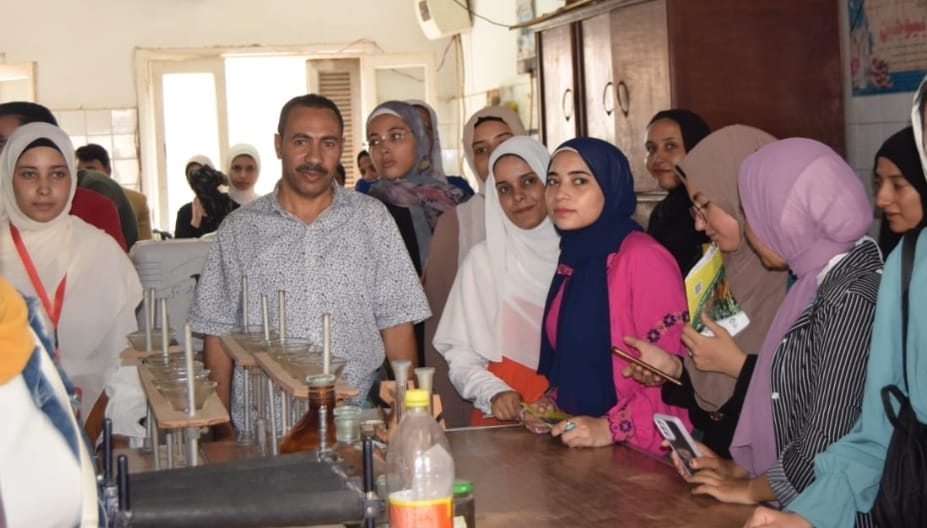
Today, Tuesday, August 15, 2023, an open dialogue was held on climate action and the importance of the climate-smart agriculture approach, in the Directorate of Agriculture in Menoufia Governorate.
The open dialogue was attended by students of agricultural faculties in some Egyptian universities and a group of agricultural engineers and those interested in environmental issues and sustainable development.
The causes of climate change and the most important challenges facing the agricultural sector in the Delta and the Arab Republic of Egypt were reviewed.
In the presence of Mr. Eng. Mohamed Barakat El-Barkawy, Undersecretary of the Ministry of Agriculture in Menoufia Governorate – Ministry of Agriculture.
And Dr. Muammar Jaber Gad, head of the Agricultural Research Station in Sirs El-Layan – Agricultural Research Center.
Dr. Fawzy El-Essawy Younis is a professor and head of the acclimatization physiology unit at the Desert Research Center and an expert on climate change and environmental sustainability issues.
And in the presence of Mr. Engineer / Hisham Abu Al-Nour, an expert in the field of Landscape and modern irrigation networks, and Engineer / Manal Rashad Shaheed, in the Department of Legislation in the Directorate.

During the meeting, several issues were discussed, the most important of which are:
1- Climate change, its causes and resulting challenges.
2- Ways of confrontation by mitigating greenhouse gas emissions, especially from the agricultural sector, in a way that does not affect productivity in quantity and quality.
3- Adapting to the negative effects of global warming and improving and developing plant strains from agricultural crops and local farm animals that are resistant to drought, salinity or high temperatures.
4- Enhancing flexibility through the adoption and use of modern technology and early warning systems, which achieves development in the sector and increases production in quantity and quality.
5- The offices of agricultural pesticides applicators, which contribute and assist large farms in implementing environmentally and agriculturally safe spraying programs, have been commended and gradually limit their use.
6- The approach of the agricultural coding mechanism and the expansion of coded agricultural areas and crops, which helps in adopting and using good agricultural practices that will help the transition towards a green and circular economy and a low-carbon economy.
7- Praising the importance of students’ interest in building their knowledge capabilities in the agricultural field – modern technology – climate action and sustainable development, which contributes and enables them to implement climate-smart projects during the study stages and before their graduation, which directly contributes to the development of the agricultural sector.
8- The importance of attention due to modern irrigation, which enables us to optimal and sustainable use of resources and helps in expanding agricultural reclamation projects such as the New Delta project and the Dabaa El Alamein axis, was also clarified, as well as the importance of treating agricultural drainage water, which allows and enables us to cultivate agricultural areas and increase productivity, which achieves water and food security locally and regionally.
There is a great need for adaptation efforts that look beyond the farm gate to address other aspects of food security that face climate risks such as crop storage, transportation and markets.
The list of adaptation options must also include the potential for major shifts in food production.
For example, climate change may require farmers to start growing completely different, more “climate friendly” crops such as cassava, quinoa, and others.
Ultimately, water issues will be the defining issues of the 21st century, from extreme water stress, weather events, scarcity, pollution and unexpected arrival.
This risk results in financial effects such as loss of revenue, higher operating costs, higher regulatory costs, and higher capital costs. Water-intensive industries such as manufacturing, food and beverage, and agriculture should be reconsidered.
And the tools and methods of assessing the current water risks leave big gaps in the decision-making process now and in the future.
A better solution is a comprehensive water and climate resilience platform that captures current and future water impacts and extreme weather risks and translates them into financial outcomes for today and tomorrow.
With the expected increase and the arrival of the world’s population to 9.6 billion people by the year 2050, it may require the equivalent of three planets like the earth to provide the necessary natural resources to maintain lifestyles in their current form, and this warns of a danger to humanity that requires attention to the environment and its preservation by sustaining the ecosystems on it.
How can we limit and confront?
We can reduce the impact of climate change on agriculture in several ways including the following:
1. Integration of climate-smart agriculture methods. Farmers can use tools to forecast climate and vegetation crops and take other steps to help manage climate-related production threats.
2. Livestock producers can expand on biogas and recover methane, a potent greenhouse gas from biogas produced by the decomposition of manure.
3. Agricultural producers can use fertilizers strategically and more sustainably for agricultural systems, such as reducing the use of pesticides and improving pollination, in turn, resulting from the use of environmentally friendly and sustainable agricultural practices.
4. Enhancing crop resistance to heat, drought and salinity in some environments. Adopting research-proven methods to reduce the effects of climate change on crops and livestock.
5. Prevent food waste, which will reduce your carbon footprint by planning your shopping trips carefully, storing food properly and donating surplus food to food banks and those in need.
Every person, without exception, must unite and work to control habits and And practices that are not environmentally friendly, which is reflected in the decline of its carbon and environmental footprint through the sustainable use of resources, the adoption of the goal of responsible production and consumption, and the activation of all goals related to sustainable development from now and during the coming days and decades.


